季度营收创纪录达1.43亿美元,季度末ARR创纪录达1.97亿美元
季度经营活动产生的现金流为4200万美元
(明尼苏达州明尼阿波利斯市,2026年11月11日)——Digi International Inc.(以下简称“Digi”或“公司”)(纳斯达克代码:DGII),作为全球领先的面向企业及任务关键型物联网(“IoT ”)连接产品、服务和解决方案提供商,今日公布了截至2026年9月30日的第四财季财务业绩。
2026财年第四季度业绩与2025财年第四季度业绩对比¹
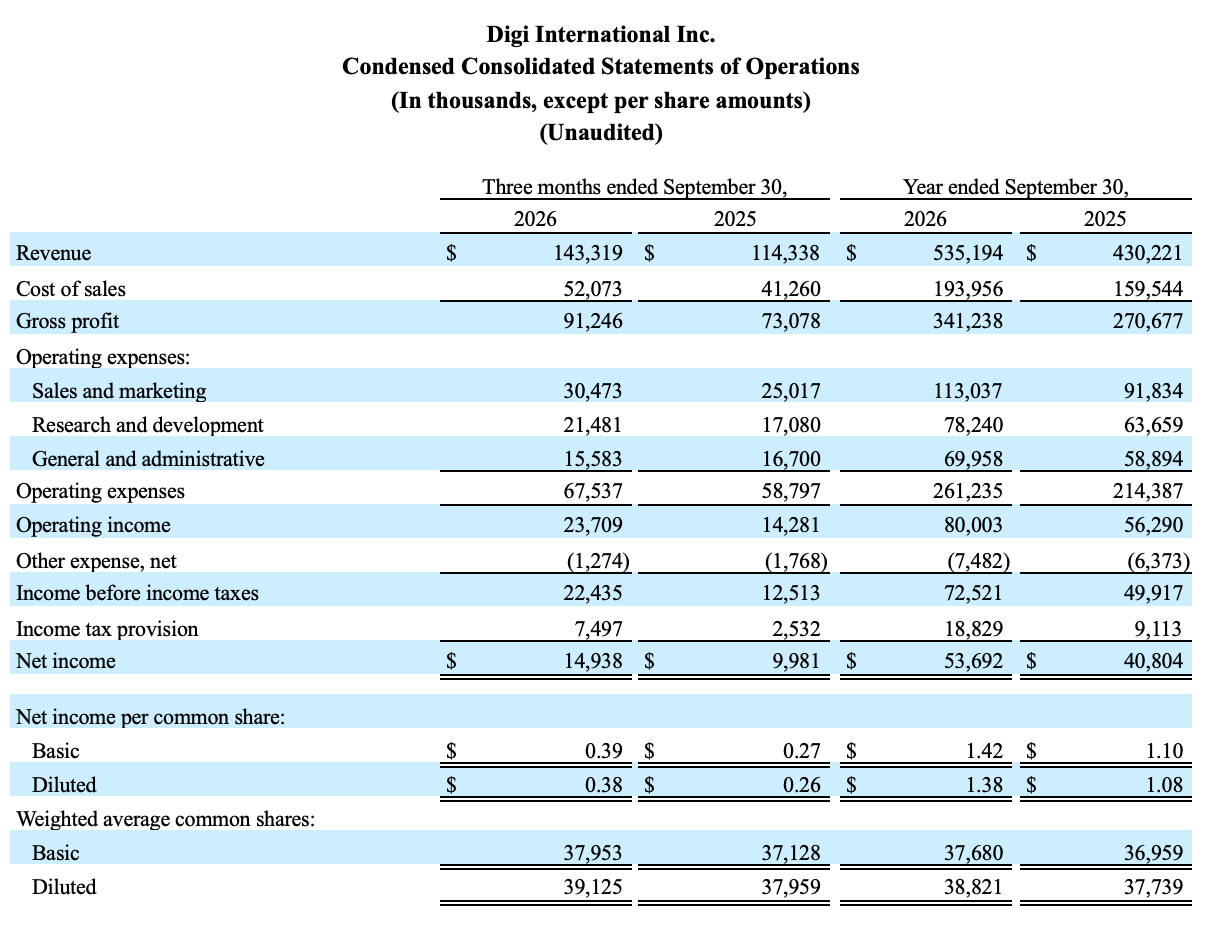
- 营收为1.43亿美元,同比增长25%。
- 毛利率为63.7%,下降了20个基点。
- 营业利润率为16.5%,增长了400个基点。
- 净利润为1500万美元,同比增长50%。
- 每股摊薄净利润为0.38美元,同比增长46%。
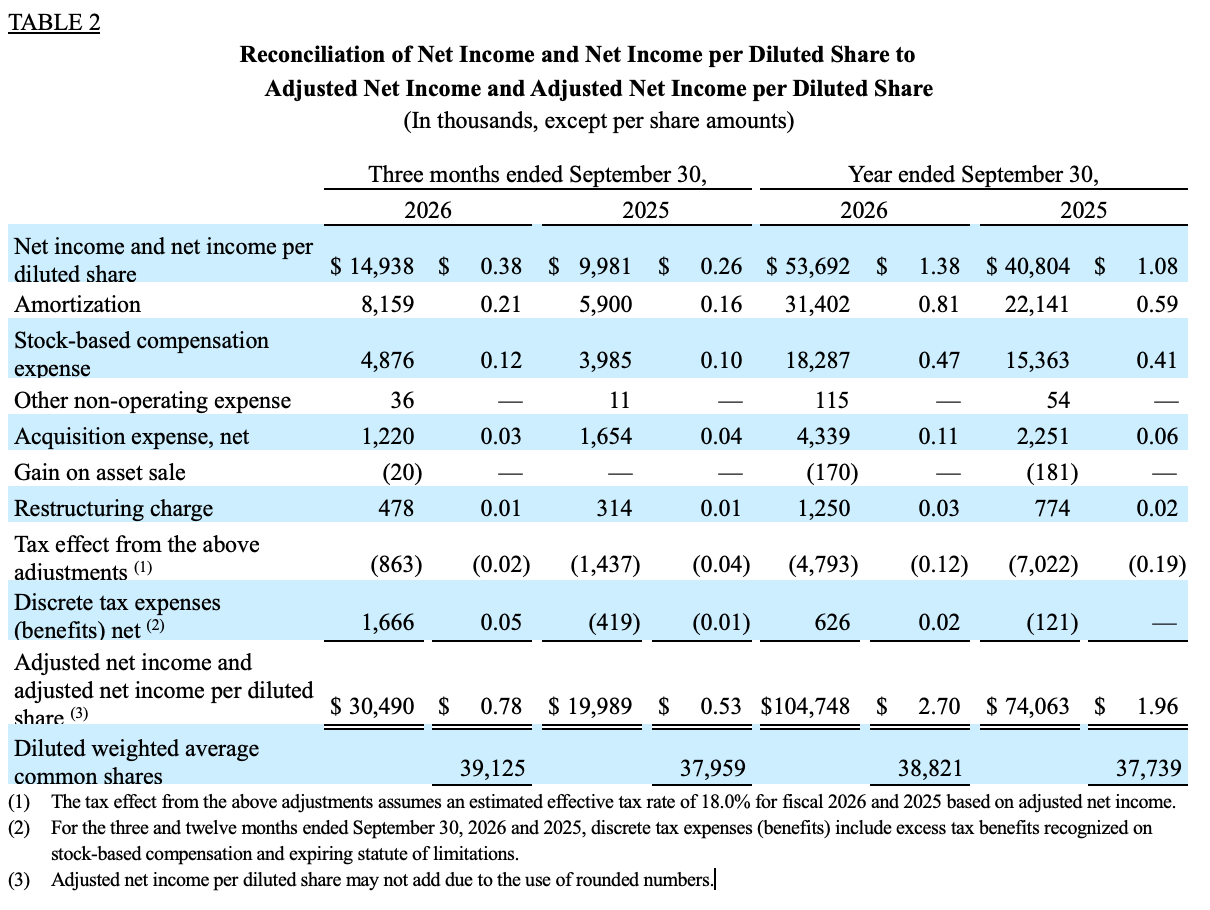
- 经调整的净利润为3000万美元,同比增长53%。
- 经调整的每股摊薄净利润为0.78美元,同比增长47%。
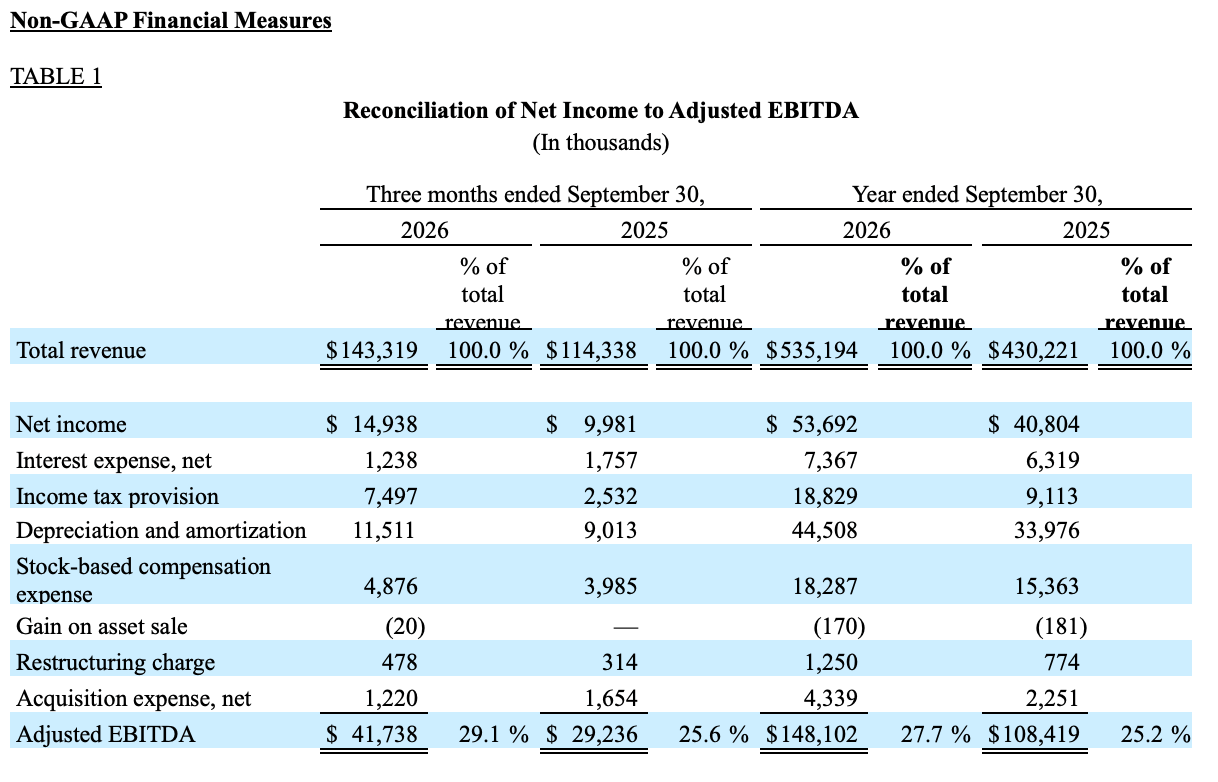
- 调整后息税折旧及摊销前利润(EBITDA)为4200万美元,同比增长43%。
- 截至年底,年化经常性收入(“ARR”)为1.97亿美元,同比增长30%。
2026财年全年业绩与2025财年全年业绩对比¹
- 营收为5.35亿美元,同比增长24%。
- 毛利率为63.8%,增长了90个基点。
- 营业利润率为14.9%,增长了180个基点。
- 净利润为5400万美元,同比增长32%。
- 每股摊薄净利润为1.38美元,同比增长28%。
- 经调整后净利润为1.05亿美元,同比增长41%。
- 经调整的每股摊薄净利润为2.70美元,同比增长38%。
- 调整后息税折旧及摊销前利润(EBITDA)为1.48亿美元,同比增长37%。
12026财年业绩包括Jolt Software, Inc.(以下简称“Jolt”)整个期间的业绩,以及自2026年1月收购日起Particle Industries, Inc.(以下简称“Particle”)的业绩。2025财年业绩包括自2025年8月收购日起Jolt的业绩,但不包括Particle的业绩。
本新闻稿末尾列出了非公认会计原则(非GAAP)财务指标与其最接近的公认会计原则(GAAP)对应指标的调节表,以及关于调整后净利润和调整后每股摊薄净利润计算方法近期变更的说明。
“2026财年对Digi而言是具有里程碑意义的一年,这体现了我们为客户提供的持续稳健的执行力,”总裁兼首席执行官罗恩·科内兹尼(Ron Konezny)表示。“客户正在认识到我们工业级IoT 解决方案的价值,该方案可提供互联、安全、远程存在与控制功能。客户的成功推动了我们关键财务绩效指标实现两位数增长。 我们期待获得监管批准,以完成对Disruptive Technologies(DT)的收购,预计该交易将于2026年11月30日前完成。 交易完成后,我们期待欢迎该团队及其领先的传感器技术加入。DT 在应用范围广、部署简便、体积小巧以及电池续航时间长等方面表现突出。随着2027财年的到来,我们很高兴年度经常性收入(ARR)即将达到2亿美元,这是我们在2024财年初设定的两个五年目标之一。”
其他财务要点
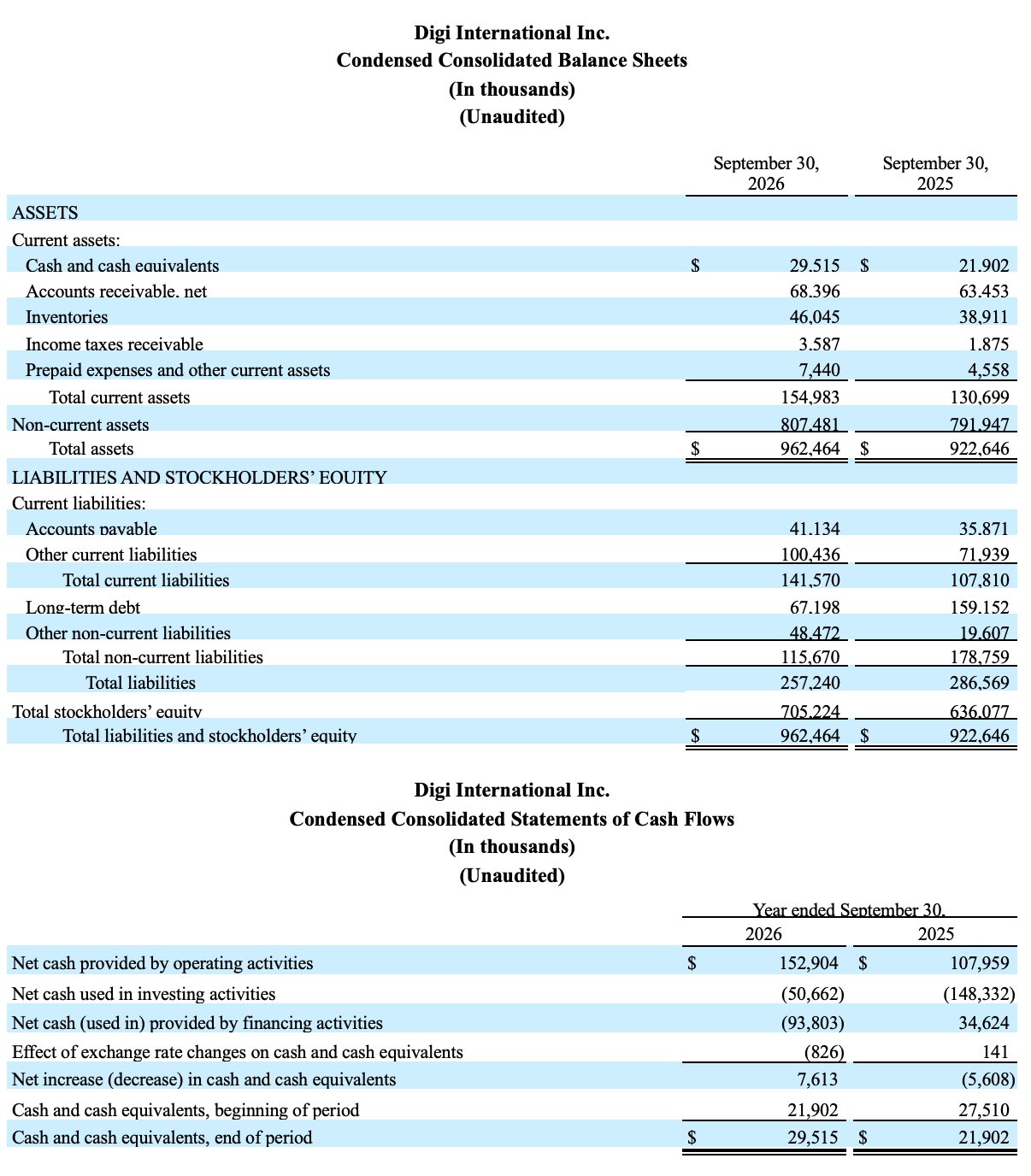
- 截至第四季度末,我们的未偿债务为6900万美元,现金及现金等价物余额为3000万美元,因此扣除现金及现金等价物后的净债务为3900万美元。
- 2026财年第四季度的经营活动现金流为4200万美元,而2025财年第四季度为2800万美元。这一增长主要源于递延所得税的变化,该变化与根据《一项伟大而美好的法案》加速利用税收优惠有关。
分部业绩
IoT 产品与服务
该业务板块2026财年第四季度的营收为1.05亿美元,较上一财年同期增长28%。其中,一次性销售额增长1,500万美元,经常性收入增长770万美元,定价因素未产生重大影响。 收入增长的绝大部分源于客户需求增加带来的有机增长,并得到了收购Particle的支撑。截至本财年第四季度末,年度经常性收入(ARR)为6,400万美元,较2025财年末增长100%。这一增长主要得益于对Particle的收购,其次是远程管理平台、延长保修服务及技术支持等订阅用户基数的增长。 2026财年第四季度的营业利润率上升了320个基点,达到收入的18.4%。这一增长主要得益于运营效率的提升,因为业务规模的扩张速度超过了运营支出的增长速度。
该业务部门2026财年的营收为3.85亿美元,较上一财年增长21%。其中,一次性销售额增长4,410万美元,经常性收入增长2,280万美元,定价因素未产生重大影响。 收入增长的绝大部分源于客户需求增加带来的内生增长,在较小程度上也得益于对Particle的收购。2026财年营业利润率上升120个基点,达到收入的16.0%。这一增长主要得益于产品线结构的优化,以及随着业务量增长速度超过运营费用增长速度,运营效率的提升。
IoT 解决方案
该业务部门2026财年第四季度的营收为3800万美元,较上一财年同期增长20%。 这一增长包括经常性收入增加540万美元以及一次性销售额增加80万美元,其中绝大多数增长均源于对Jolt的收购。截至本财年第四季度末,年度经常性收入(ARR)为1.33亿美元,较2025财年末增长11%,这主要得益于我们解决方案业务领域的有机增长。 与上一财年同期相比,2026财年第四季度的营业利润率上升了590个基点,达到11.5%。这一增长得益于运营效率的提升,因为业务规模的扩张速度超过了运营支出的增长速度。
该业务部门2026财年的营收为1.5亿美元,较上一财年增长了34%。 这一增长包括经常性收入增加2980万美元以及一次性销售额增加830万美元,其中绝大多数增长均源于对Jolt的收购。与上一财年相比,2026财年的营业利润率上升了380个基点,达到12.1%。这一增长得益于营业利润率的提升,因为业务量的增长速度超过了营业费用的增长速度。
资本分配战略
并购仍是Digi的首要资本优先事项,这体现在我们于2026年9月30日签署的最终协议中:我们将以1.3亿美元现金收购总部位于挪威的先进传感技术提供商DT,预计将利用现有的循环信贷额度为此次收购提供资金。该收购的完成仍需获得监管机构批准并满足其他惯常的交割条件。
我们将继续秉持严谨的态度,并在认为当前市场环境下存在合适投资机会时果断采取行动。
2027财年第一财季及全年业绩指引
向软件驱动的互联运营转型,持续推动着对硬件支持型软件解决方案的持久需求,这些解决方案能够满足客户最关键的业务需求。传统的“设置后无需管”式基础设施,已越来越难以满足当今组织在运营、合规和竞争方面所面临的要求。
来自工业、基础设施和企业市场的客户都将互联性、边缘智能和软件能力视为其战略路线图的基本推动力。随着工业活动全面回暖,以及自动化、能源和数据基础设施领域的投资加速,客户已将这些能力视为必不可少的基础设施,而非可有可无的开支。 Digi 已做好充分准备以把握这一需求,即使在应对不断变化的全球贸易格局以及零部件成本(尤其是内存)上涨的挑战时,我们也能通过严谨的定价策略、灵活的供应链以及稳健的经常性收入模式来应对。
我们专注于能够产生经常性收入流,并在客户购买初始设备之后持续为其创造复利效应的解决方案。 我们今天公布的业绩以及对2027财年的展望,都体现了这一商业模式的优势——它为我们的利润率结构提供了保障,这是单纯依赖硬件业务的企业无法比拟的。ARR增长、利润率提升以及客户留存率的趋势,都进一步增强了我们对在目标时间范围内实现ARR和调整后EBITDA均达到2亿美元这一目标的信心。与这些目标相契合的战略收购,仍是加速我们发展进程的重要手段。
对于2027财年,我们预计ARR(年度经常性收入)较2026财年将增长至少15%。预计营收较2026财年将增长10%至15%。预计调整后EBITDA较2026财年将增长12.5%至17.5%。
预计本财年第一季度营收将在1.40亿至1.44亿美元之间。调整后EBITDA预计在3950万至4100万美元之间。 假设加权平均稀释后股数为3950万股,预计每股稀释后调整后净利润将在0.71美元至0.75美元之间。其中包含利息带来的预期影响,约为每股稀释后0.02美元至0.04美元。
我们针对经调整的每股摊薄净利润和经调整的息税折旧及摊销前利润(EBITDA)提供指导性预测或长期目标,上述指标均基于非公认会计原则(非GAAP)计算。我们未将这些项目与最可比的公认会计原则(GAAP)指标进行调节,因为若不付出不合理的努力,则无法预测包括但不限于外汇折算、重组、利息及某些税务相关事件在内的众多项目的影响。鉴于这种不确定性,上述任何项目都可能对公认会计原则(GAAP)下的财务结果产生重大影响。
2026财年第四季度视频电话会议详情
根据2026年10月19日的公告,Digi将于2026年11月11日(星期三)美国东部时间下午5:00左右(中部时间下午4:00)通过视频电话会议讨论其第四财季业绩。本次电话会议将由总裁兼首席执行官Ron Konezny和首席财务官Jamie Loch主持。
与会者可通过以下链接注册仅限音频的电话会议:https://register-conf.media-server.com/register/BIe423522c5519441f91085ad243ab21ec。注册完成后,系统将提供拨入号码和密码,以便您加入会议。请所有与会者在会议开始前15分钟拨入。
参与者可通过Digi网站(https://digi.gcs-web.com/)的“投资者关系”栏目,或通过主办网站(https://edge.media-server.com/mmc/p/vijn28e6/)观看视频电话会议的实时网络直播。
电话会议结束后约两小时内,将提供回放,有效期约为一年。您可通过Digi网站“投资者关系”栏目访问网络直播回放。
您可以通过 Digi 网站www.digi.com 的 "投资者关系 "部分的 "财务新闻稿 "页面查阅本财报。
如需了解更多关于Digi的新闻和信息,请访问www.digi.com/aboutus/investorrelations。
关于 Digi International
Digi International Inc.(纳斯达克股票代码:DGII)是全球领先的IoT 连接产品、服务及解决方案提供商。我们帮助客户打造新一代联网产品,并在要求严苛的环境中以高安全性和高可靠性部署、监控和管理关键通信基础设施。公司成立于1985年,迄今已帮助客户连接超过1亿台设备,且这一数字仍在持续增长。如需了解更多信息,请访问Digi官网:www.digi.com。
前瞻性陈述
This press release contains "forward-looking statements" as that term is defined under the Private Securities Litigation Reform Act of 1995, and within the meaning of Section 27A of the Securities Act of 1933, as amended, and Section 21E of the Securities Exchange Act of 1934, as amended, that are based on management's current expectations and assumptions. These statements often can be identified by the use of forward-looking terminology such as "anticipate," "assume," "believe," "continue," "could," "estimate," "expect," "intend," "may," "outlook," "remain," "plan," "potential," "project," "seek," "should," "target," "will," or "would" or the negative thereof or other variations thereon or similar terminology. Among other items, these statements relate to expectations of the business environment in which Digi operates, projections of future performance, including but not limited to expectations regarding the Company's profitability, operating margins and net cash position, growth in Annualized Recurring Revenue and subscription-based recurring revenue, demand trends, including those related to data center and artificial intelligence infrastructure, expected declines in sales of mature hardware products, inventory levels, perceived marketplace opportunities, the sufficiency of our liquidity and capital resources, borrowings and debt repayments, the expected benefits, timing, financing and integration of actual or potential acquisitions, including Disruptive Technologies, and statements regarding our mission and vision. Such statements are not guarantees of future performance and involve certain risks, uncertainties and assumptions. Among others, these include risks related to our ability to realize synergies and operating benefits from completed acquisitions, risks associated with our proposed acquisition of Disruptive Technologies, including the possibility that the transaction may not be completed on the anticipated terms or timetable, or at all, and, if completed, our ability to successfully integrate the acquired business and realize the anticipated benefits of the acquisition; risks related to our indebtedness under our credit facility, including borrowings used to fund acquisitions, changes in interest rates and our ability to comply with the covenants in our credit agreement; macroeconomic conditions, including changes in inflation, interest rates, and foreign currency exchange rates, the potential for longer than expected sales cycles or changes in customer purchasing patterns, our ability to grow recurring revenue, which depends on customer adoption, retention, renewal and expansion of our subscription-based offerings, the ability of companies like us to operate a global business in such conditions as well as negative effects on product demand and the financial solvency of customers and suppliers in such conditions, our dependence on a global supply chain and risks associated with the availability, cost and delivery of components and products, regulatory risks that include, but are not limited to, changes in U.S. and foreign trade, tariffs, tax, sanctions, and export controls, potential changes to regulations impacting the functionality or compliance of our products, risks related to cybersecurity threats, vulnerabilities, and incidents affecting us, our products, services and internal systems, or our customers, suppliers or third-party services providers, including risks associated with data privacy, connected devices, remote-access technologies, cloud-based platforms and third-party or open-source components, the increasing use of artificial intelligence by threat actors to identify and exploit vulnerabilities and conduct more sophisticated cyberattacks; interruptions, outages, performance failures or other disruptions affecting our cloud-based platforms, hosted services, communications networks or third-party infrastructure providers; evolving laws, regulations and industry standards concerning cybersecurity, data privacy, data localization, connected products, artificial intelligence and digital infrastructure; risks arising from geopolitical instability and military conflicts, including developments involving Ukraine, the Middle East, China and Taiwan, the highly competitive market in which we operate, rapid changes in technologies that may displace products sold by us, declining prices of networking products, declining demand for our mature hardware products, potential fluctuations in data center and artificial intelligence infrastructure spending, our reliance on distributors and other third parties to sell our products, the potential for significant purchase orders to be canceled or changed, delays in product development efforts, uncertainty in user acceptance of our products, the ability to integrate our products and services with those of other parties in a commercially accepted manner, potential liabilities that can arise if any of our products have design or manufacturing defects, product performance or security issues, our ability to defend or settle satisfactorily any litigation, the impact of natural disasters and other events beyond our control that could negatively impact our supply chain and customers, potential unintended consequences associated with restructuring, reorganizations or other similar business initiatives that may impact our ability to retain important employees or otherwise impact our operations in unintended and adverse ways, potential impairment of goodwill or other intangible assets, including as a result of a sustained decline in our market value, and changes in our level of revenue or profitability which can fluctuate for many reasons beyond our control. These and other risks, uncertainties and assumptions identified from time to time in our filings with the United States Securities and Exchange Commission, including without limitation, those set forth in Item 1A, Risk Factors, of our Annual Report on Form 10-K for the year ended September 30, 2025, and our Annual Report on Form 10-K for the year ended September 30, 2026, when filed, and any other subsequent filings, could cause our actual results to differ materially from those expressed in any forward-looking statements made by us or on our behalf. Many of such factors are beyond our ability to control or predict. These forward-looking statements speak only as of the date for which they are made. Except to the extent required by law, we do not undertake, and expressly disclaim, any intent or obligation to update any forward-looking statements, whether as a result of new information, future events or otherwise.
非美国通用会计准则财务指标的列报
本公告包含调整后净利润、调整后每股摊薄净利润以及调整后息税折旧及摊销前利润(“调整后EBITDA”),上述各项均为非公认会计原则(非GAAP)财务指标。
在2026财年第一季度,Digi调整了其计算调整后净利润和调整后每股摊薄净利润的方法,以纳入利息支出的影响。这一变更主要是由于公司持续通过融资来满足现金流需求,因此将具有经常性特征的利息纳入计算,管理层认为这能提供一个更能反映经营业绩和现金生成能力的指标。 据此,我们评估了该变更对前期披露信息的影响,并已对所有期间的调整后净利润和调整后每股摊薄净利润进行了重述,以符合本次列报标准。
我们理解,非公认会计原则(非GAAP)指标的使用存在重大限制。就分析财务业绩而言,非GAAP指标不能替代公认会计原则(GAAP)指标(如净利润)。 披露这些指标并不反映Digi实际确认的所有费用和收益。这些非公认会计原则(非GAAP)指标既不符合公认会计原则(GAAP)的要求,也不能替代根据GAAP编制的指标,且可能与其他公司使用的非GAAP指标或我们在先前报告中列示的指标存在差异。此外,这些非GAAP指标并非基于任何全面的会计规则或原则。 我们认为,非 GAAP 指标存在局限性,因为它们未能反映根据 GAAP 确定的与本公司经营业绩相关的所有金额。我们认为,这些指标仅应与相应的 GAAP 指标结合使用,以评估本公司的经营业绩。 此外,调整后息税折旧摊销前利润(Adjusted EBITDA)和调整后息税折旧摊销前利润率(Adjusted EBITDA Margin)并未反映本公司的现金支出、替换已折旧及摊销资产所需的现金需求,以及营运资金需求的变化或相关现金需求。
我们认为,提供历史数据和经调整的净利润以及经调整的每股摊薄净利润(不包括税项准备金转回、非经常性税项费用(收益)净额、重组费用及转回、无形资产摊销、股权激励费用、其他非经营性收入/费用、资产出售收益以及与收购相关的费用等项目),可使投资者将当前业绩与未包含这些项目的前期业绩进行比较。 管理层使用上述非公认会计原则(非GAAP)指标来监控和评估持续的经营业绩及趋势,并以此了解本公司的相对经营表现。此外,部分股东表示希望看到剔除这些事项影响的财务业绩指标——尽管这些事项很重要,但并非本公司核心业务运营的重点。 管理层认为,经调整的息税折旧摊销前利润(Adjusted EBITDA)——即我们按税前净利润扣除利息、税项、折旧及摊销,并调整股权激励费用、收购相关费用、资产出售收益以及重组费用及转回后的金额计算得出——有助于投资者评估我们的核心经营业绩和财务表现,因为该指标排除了简明合并损益表中反映的重大非现金项目及其他项目,而管理层认为这些项目不能反映我们的核心经营表现。 我们认为,将调整后EBITDA作为收入的百分比(“调整后EBITDA利润率”)进行列报具有实用价值,因为它提供了一种可靠且一致的方法,既可用于衡量我们逐年的业绩表现,也可用于将我们的业绩与其他公司进行比较。我们认为,该信息有助于在排除资本结构及资产收购方式影响的前提下,比较经营成果和公司业绩。
投资者联系方式
罗布-贝内特
投资者关系
迪吉国际
952-912-3524
电子邮件:rob.bennett@digi.com